
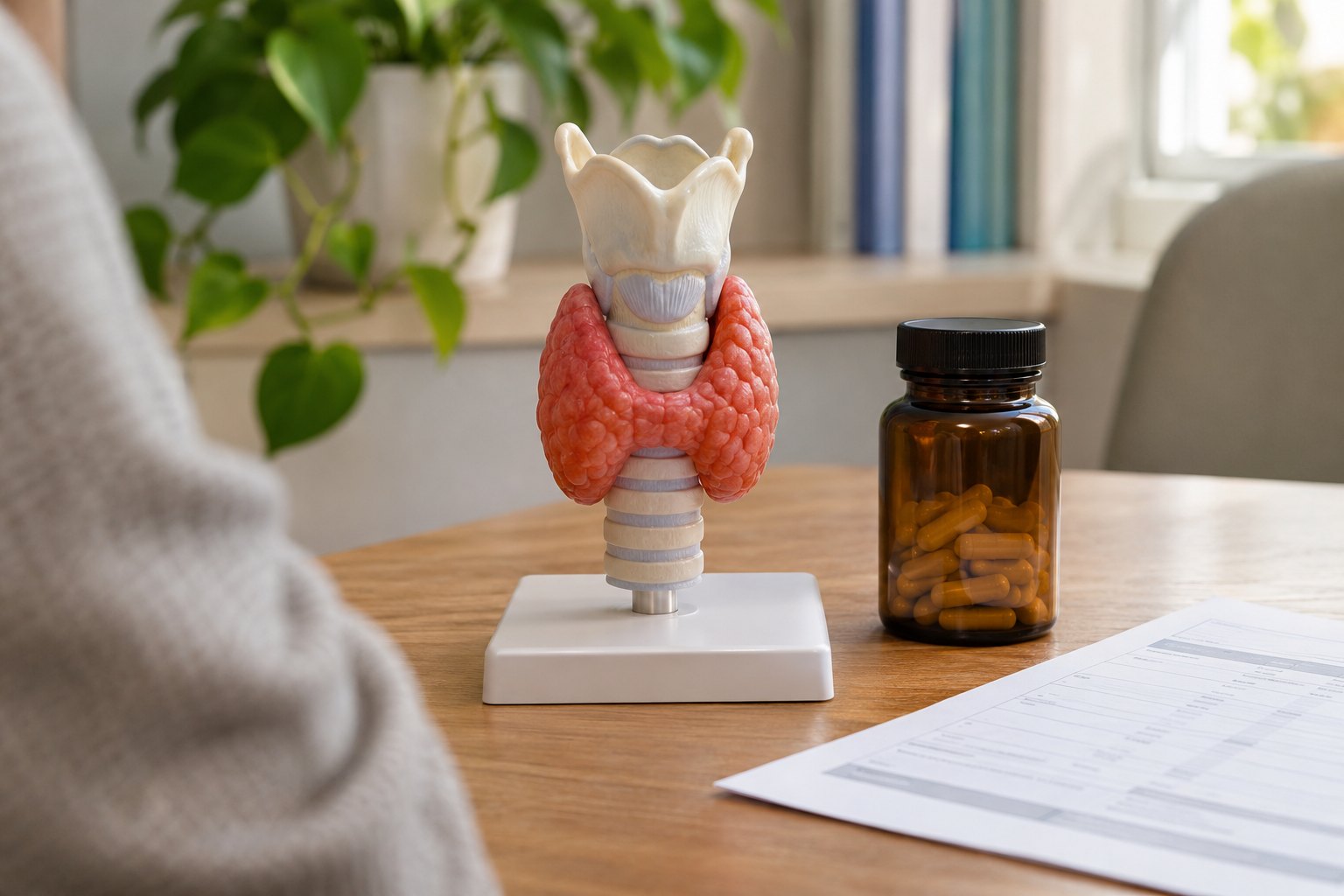
What should you know about diet and supplements with Hashimoto’s?
If you have Hashimoto’s thyroiditis, decisions about food and supplements depend on how your thyroid is working, what medicine you take and your nutritional needs. Iodine and selenium have roles in thyroid function, and the amounts you already get matter when considering a supplement. Bring your recent results and a list of the products you use to your next appointment so you can ask about your own situation.
What thyroid monitoring can tell you
Hashimoto’s is an autoimmune condition that affects the thyroid. Some people have normal thyroid function at diagnosis. Others develop hypothyroidism, which means the gland makes too little thyroid hormone. Your doctor may use a thyroid-stimulating hormone (TSH) test and, when appropriate, a free T4 test to assess thyroid function and decide what follow-up is needed.
If you take levothyroxine, your clinician can advise when to retest and whether your prescription needs to change. Tell them when new symptoms began and how you take your medicine on a typical day. Mention any recent changes in supplements, including products you take only occasionally or that were marketed as general wellness products.
Check the iodine in seaweed and supplements
Your thyroid uses iodine to produce hormones. Food, iodized salt and some supplements provide iodine. Seaweed products such as kelp can contain high or variable amounts, and excess iodine can interfere with thyroid function in susceptible people.
Ask a doctor or pharmacist to review the label before adding iodine drops, kelp capsules or a product marketed for thyroid support. Bring the labels of your other products too. A multivitamin may already contain iodine, and the amount in a seaweed-based product may be listed in smaller print on the ingredient panel.
Selenium and vitamin D deserve separate questions
Selenium plays a role in how the body handles thyroid hormones. Foods such as fish, eggs and meat provide selenium. Studies of selenium supplements for Hashimoto’s have measured different outcomes, and the benefit for symptoms and quality of life remains uncertain. Too much selenium can cause harmful effects. Ask what a supplement would be intended to do in your case and how you and your clinician would evaluate it.
If you have had a low vitamin D result, discuss that result and your overall care with the clinician who is following you. Take the dated report and the labels of any products you have used since. Our guide to personalized supplement assessment explains why a review of your current products and goals can help guide these decisions.
Fit your eating habits around your care
Identify one concern you want to address. Perhaps you are trying to plan lunches more consistently, or you want to know whether several products provide the same ingredient. If you have symptoms that could point to celiac disease, talk to your doctor about testing before making a change to the gluten in your diet. That conversation can help determine which dietary changes are appropriate.
Iron and calcium supplements can affect how your body absorbs levothyroxine. If you have been advised to use one of them, ask your doctor or pharmacist how to schedule it alongside your medication. Write down your current schedule, including meals and drinks you have when you take your medicine. Share this with your clinician before changing the timing of a prescribed treatment.
Three questions to bring to your next visit
- Which results show how my thyroid is working, and when should they be checked again?
- What would justify the supplement I am considering, and how much iodine, selenium, iron or calcium does it contain?
- How would that product fit with my current medicines and eating habits?
Bring the actual reports with the dates and units, and keep a copy of the labels. If you started a product or changed how you take your medicine, include the approximate date. A timeline gives your clinician more context for reviewing symptoms and test results.
Support with nutrition habits at Zen House
If you are already receiving medical care for Hashimoto’s and want to discuss everyday eating habits, learn what the naturopathy service at Zen House includes. Coordinate thyroid monitoring and prescribed treatment with your doctor. Our guide to preparing for a first naturopathic consultation explains what to bring. Visit the Tirana consultation page if you would like to discuss a practical question about meals or your current supplement list.