Pilates for Strength or Flexibility: What Can You Realistically Expect?
Pilates is often associated with a stronger core and better flexibility. Both are reasons people decide to try a class, but they can also create confusing expectations. Will Pilates make you stronger? Will it help if you cannot touch your toes? And how long will it take to notice a difference?
Pilates can help you practise strength, mobility, balance and movement control. The changes you experience depend on your starting point, the exercises you do, how the sessions progress and how consistently you attend. It helps to think of Pilates as a way to develop movement skills over time, rather than a shortcut to a particular result.
Can Pilates Make You Stronger?
Yes, Pilates can challenge your muscles. Many exercises ask you to control your body position while moving your arms or legs, holding a position, or working against resistance. Depending on the class, that resistance may come from your body weight or equipment.
You may notice the effort in your abdomen, back, hips, legs and shoulders. For someone who has not exercised regularly, even a movement that looks simple can require considerable control.
As you continue practising, exercises that once felt unfamiliar may become easier to perform. You might find that you can move with better coordination, maintain a position more comfortably or complete a more challenging variation. These are meaningful forms of progress.
The type of strength you develop will depend on the exercises and how they become more demanding. If your main goal is to lift increasingly heavy weights or build maximum strength, you may also need a progressive resistance training programme. Pilates can be part of your routine without having to meet every fitness goal on its own.
Does Pilates Improve Flexibility?
Pilates includes movements that take your joints through a comfortable range of motion. With regular practice, some people find that certain movements feel less restricted and that they can move more confidently.
You do not need to be flexible before your first class. A beginner can start with a smaller range of movement and adapt an exercise to suit their current ability. As you become more familiar with the movement, you may be able to perform it with greater ease.
It is useful to distinguish flexibility from simply reaching as far as possible. Forcing a stretch is not the aim. In Pilates, the goal is usually to move with control while respecting what feels comfortable for your body on that day.
Results can also vary from one area to another. You may notice a change in how your hips move while your shoulders still feel stiff, or vice versa. If a restriction causes pain or affects daily activities, an individual assessment may be more useful than repeatedly stretching the area.
Strength and Flexibility Often Develop Together
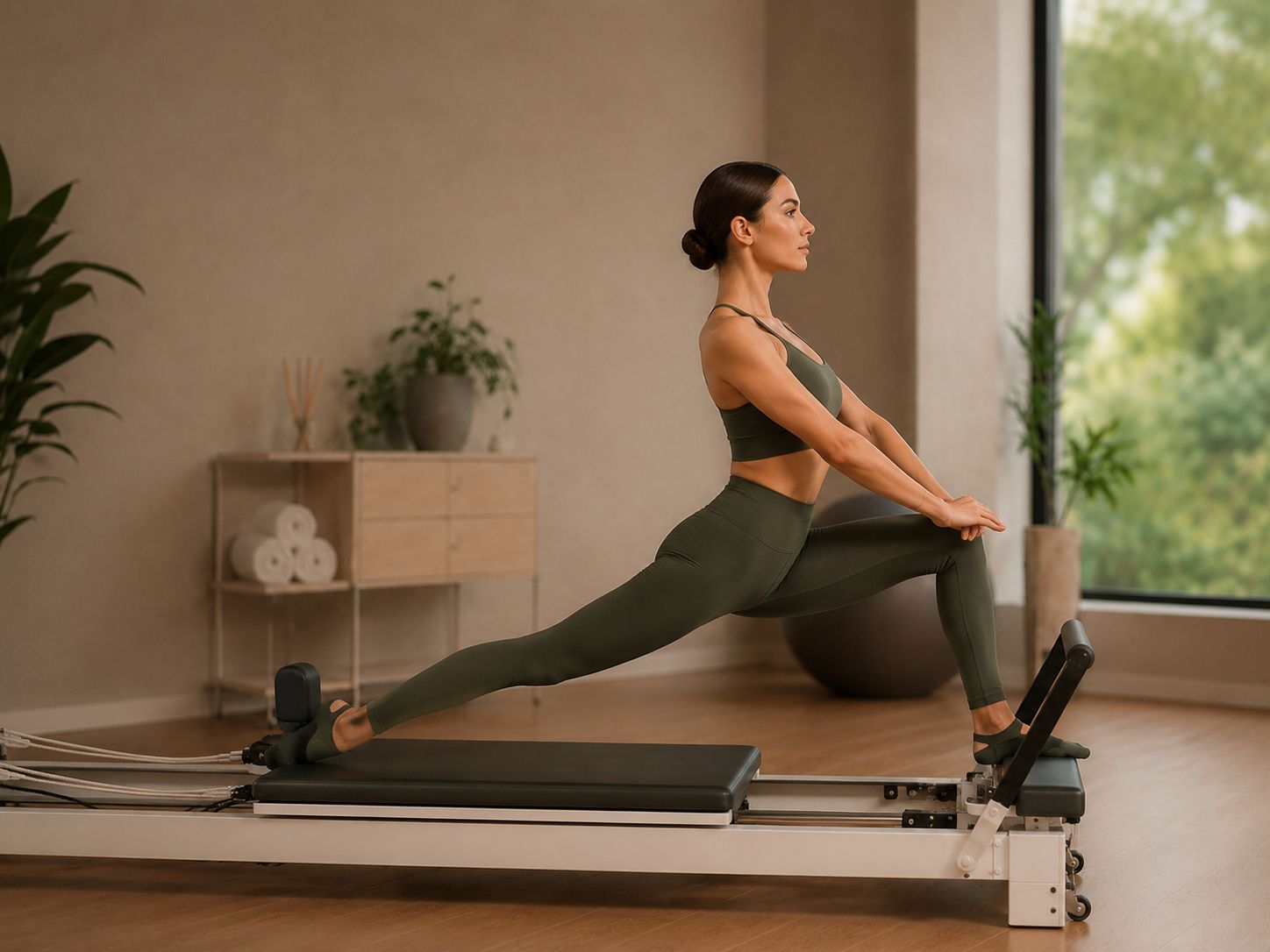
Pilates does not require you to choose between strength and flexibility. Many exercises ask you to control a movement through a range of motion. That means a session can challenge your muscles while also giving you practice moving more comfortably.
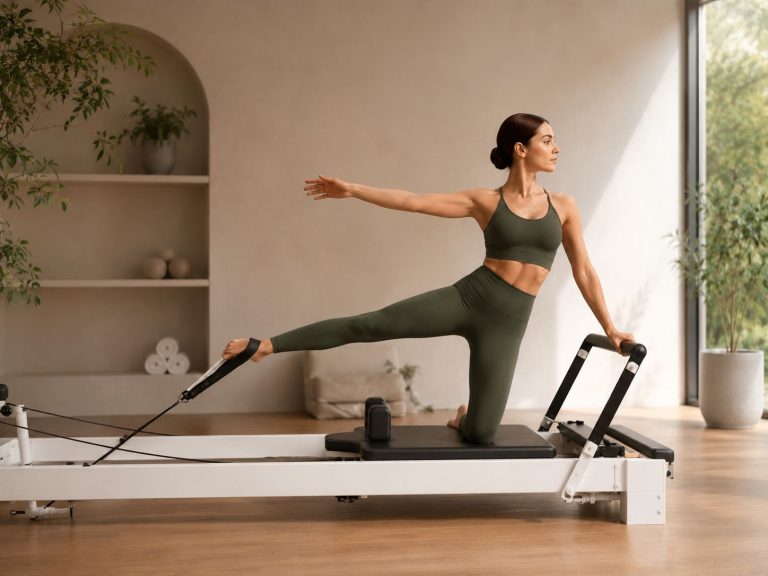
For example, an exercise may ask you to move a leg while keeping the rest of your body steady. The goal is not only to move the leg farther or to hold the position longer. It is to coordinate both actions with control.
This is one reason beginners should not judge a class only by how tired or sore they feel afterward. Learning to perform a movement smoothly, with less unnecessary tension, can be progress even when the exercise does not feel intense.
What Changes Might You Notice First?
Early progress is often subtle. You may begin to understand the instructor’s cues, recognise which exercises need a simpler variation or feel more confident joining a class. A movement that initially required a great deal of concentration may start to feel more familiar.
With continued practice, you might notice improvements in balance, control or your ability to complete particular exercises. Changes in strength or flexibility may take longer to recognise, especially if you are comparing yourself with other people rather than with your own starting point.
There is no reliable number of classes after which everyone will see the same result. Attendance, class difficulty, other activities, recovery and individual circumstances all affect progress. Instead of looking for a fixed deadline, choose one or two movements you want to improve and ask your instructor how to track them over time.
Can Pilates Replace Stretching or Strength Training?
That depends on what you want from your overall exercise routine.
A Pilates class may include movements that challenge your muscles and take you through different ranges of motion. For general activity, you may enjoy it as a regular part of your week. But classes vary: one may place more emphasis on gentle movement, while another may offer a greater strength challenge.
If you have a specific goal, such as improving performance in a sport or increasing the amount of weight you can lift, you may benefit from other forms of training as well. Likewise, if a particular movement limitation is your main concern, you may need a more individual approach than a general class provides.
Pilates also does not cover every aspect of fitness automatically. Walking, cycling or other aerobic activities can complement it, depending on your interests and needs. The best combination is one you can follow consistently.
How Can Beginners Get More from Pilates?
Start with a class suited to your experience and tell the instructor what you hope to achieve. “I want to feel stronger” and “I want to move more comfortably” are both useful starting points, but you can be more specific. Perhaps you want to feel steadier during an exercise or understand why a particular movement feels difficult.
Pay attention to the quality of your movement before trying harder variations. Ask for an adjustment if an exercise causes pain or if you are unsure what you should be doing. Gradual progression gives you a clearer sense of what is improving.
Finally, allow the routine to fit your life. Attending regularly matters more than setting a schedule you cannot maintain. If you are new to Pilates, you can read our guide on how often beginners should practise Pilates before deciding what feels manageable.
What Can You Realistically Expect?
Pilates can be an enjoyable way to work on strength, flexibility and movement control. You may become more confident with the exercises, feel stronger in certain movements and find that some positions become more comfortable over time. Your experience will be individual, and Pilates does not promise a particular change in appearance or a cure for pain.
At Zen House, you can explore Pilates classes in Tirana and learn what to expect from your first class. Discuss your goals and any movement limitations with the team so you can choose an appropriate place to begin.
Frequently Asked Questions
Is Pilates better for strength or flexibility?
It can support both. The emphasis depends on the exercises, class format and your starting point. Tell your instructor which goal matters most to you.
Do I have to be flexible to start Pilates?
No. Exercises can often be adapted to your current range of movement. Flexibility is not an entry requirement.
Will Pilates give me the same results as lifting weights?
Pilates can build strength, but it may not provide the same progression as a programme designed around lifting increasingly heavy weights. The right choice depends on your goals.
How long does it take to notice Pilates benefits?
There is no fixed timeline. Some people first notice that exercises feel more familiar or controlled; other changes depend on regular practice, suitable progression and individual circumstances.