
Dermapen vs Chemical Peels for Uneven Skin Texture
Uneven skin texture can mean different things. You may notice rough patches, visible pores, shallow lines or small depressions left by acne. Because these concerns do not all have the same cause, there is no single treatment that works best for every person.
Two options you may encounter are Dermapen microneedling and chemical peels. Both can be used to address aspects of skin appearance, but they work differently. Dermapen uses fine needles to create controlled punctures in the skin. A chemical peel applies a solution that removes layers of skin to a degree determined by its ingredients and strength.
If you are comparing Dermapen vs chemical peel for uneven texture, the most useful first step is to identify exactly what you want to improve.
What Kind of Uneven Texture Do You Have?
Look closely at the concern you are describing. Does your skin feel rough to the touch? Are you seeing small depressions where acne has healed? Is the surface fairly smooth, but the colour looks uneven?
These differences matter. A change in skin tone is not the same as a depressed acne scar, even when both become noticeable after a breakout. Likewise, pores may look more visible without there being a scar to treat.
A professional skin assessment can help separate these concerns and set realistic expectations. It may also identify active acne, irritation or another issue that should be addressed before considering a procedure.
How Does Dermapen Work?
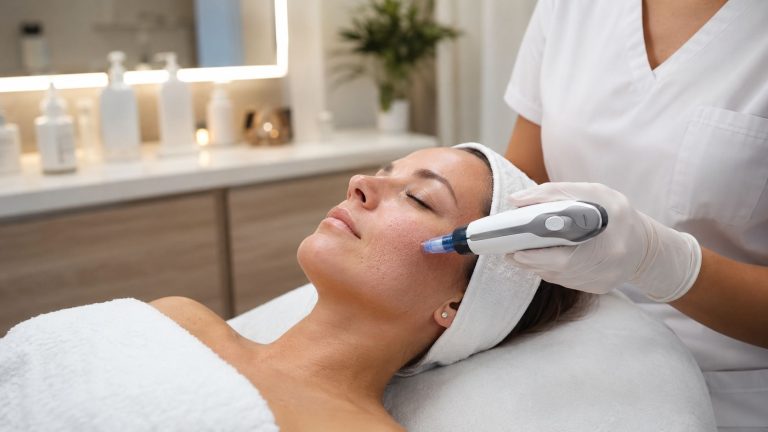
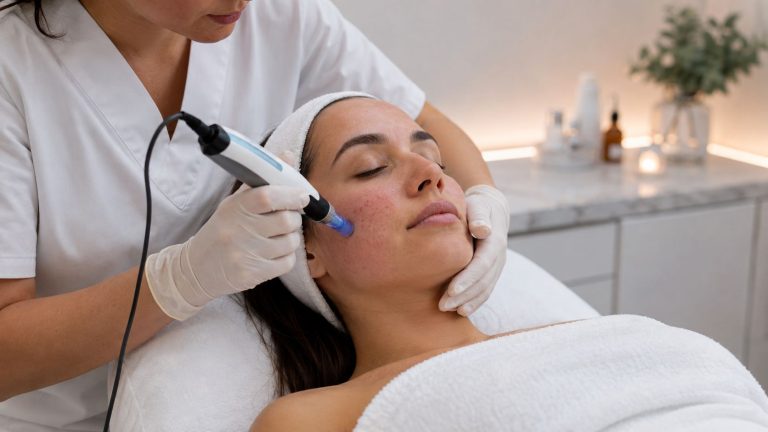
Dermapen 4 is a professional microneedling device. Fine needles make controlled, small punctures in the skin, triggering a repair response. A practitioner may consider microneedling for concerns such as certain acne scars, uneven texture and fine lines.
The treatment can be adapted to the area and the skin concern. That does not mean every type of uneven texture will respond in the same way. The appearance of a depressed scar, for example, may require a different discussion from the appearance of generally rough skin.
At Zen House, you can read about Dermapen 4 microneedling in Tirana and its approach to Dermapen for acne scars. A consultation is needed to determine whether your particular concern is suitable for treatment.
How Does a Chemical Peel Work?
A chemical peel applies a carefully selected solution to the skin. Depending on the type and strength of the peel, it removes skin layers to different depths. Professional peels may be considered for concerns that include rough-looking skin, some types of acne and uneven skin tone.
“Chemical peel” is a broad term. A mild peel and a deeper peel differ substantially in preparation, recovery and risk. The exact solution, its concentration and how long it remains on the skin all affect the procedure.
That is why a comparison cannot simply claim that peels are gentler or stronger than Dermapen. You would need to know which peel is being proposed and which skin concern it is intended to address.
Dermapen vs Chemical Peel: The Main Differences
| Question | Dermapen microneedling | Chemical peel |
|---|---|---|
| How does it work? | Fine needles create controlled punctures in the skin. | A chemical solution removes skin layers to a selected depth. |
| What varies between treatments? | Needle depth and the treatment approach. | Ingredients, strength, application and peel depth. |
| Can it be discussed for acne scars? | Yes, depending on the scar type and skin assessment. | Some peels may be part of an acne-scar treatment plan, depending on the scar and peel. |
| Is recovery identical for everyone? | No. It varies with the treatment and individual skin response. | No. It varies considerably with peel depth and individual skin response. |
| Is professional assessment important? | Yes. | Yes. |
Neither option can be chosen reliably from a comparison chart alone. A practitioner needs to look at your skin and explain what improvement is plausible.
Which Is Better for Acne Scars?
It depends on the scars. Small depressions, deeper scars, lingering dark marks and active acne are different concerns, although a person may have several at once.
Microneedling is often discussed for the appearance of certain depressed acne scars. Chemical peels may also have a role in acne-scar care, but their usefulness depends on the peel and the type of change being treated. Some scars may need another approach or a combination of treatments.
Ask the practitioner to identify what they see on your skin rather than treating every mark as an “acne scar.” Then ask what the proposed treatment could realistically change and what it is unlikely to change. This helps you evaluate a recommendation without expecting completely smooth skin after a fixed number of sessions.
What About Downtime and Aftercare?
After Dermapen, skin may be red or sensitive. After a chemical peel, the response can range from mild changes to more substantial peeling and recovery, depending on the peel depth. Individual skin reactions vary with both treatments.
Before agreeing to either procedure, ask what your skin may look like during recovery, which products to avoid and how to protect it from the sun. Mention any upcoming events so you can discuss a suitable treatment date.
Tell the practitioner about your skincare routine, previous treatments, current irritation and any history of unusual scarring or pigmentation changes. Avoid trying to accelerate results by adding strong exfoliating products during recovery unless your treating professional advises you to do so.
Are There Risks?
Yes. Microneedling can involve risks such as irritation, infection, scarring or changes in pigmentation. Chemical peels can also cause unwanted pigmentation changes, burns or scarring, particularly when an unsuitable product or strength is used.
The risks depend on the individual, the procedure and the skill of the person performing it. Strong chemical peel products should not be treated as an easy home alternative to a professional consultation. Ask who will perform the procedure, how they assess suitability and what you should do if your skin reacts unexpectedly.
Questions to Bring to a Skin Consultation
If uneven texture is your main concern, ask:
- Is the issue roughness, scarring, pigmentation or a combination?
- What improvement could I reasonably expect from the recommended treatment?
- Why do you recommend this option for my skin?
- What are its risks for my skin tone and medical history?
- How many sessions might be considered, and when would results be reviewed?
- What preparation and aftercare will I need?
- Would another approach be more suitable for any part of my concern?
These questions are useful whether you are considering microneedling, a chemical peel or another skin treatment.
Making an Informed Choice
The practical difference between Dermapen and a chemical peel is how they work: one uses needles to create controlled punctures, while the other uses a chemical solution to remove skin layers. Which approach is appropriate depends on the nature of your uneven texture, your skin and the specific procedure proposed.
Zen House provides Dermapen 4 microneedling in Tirana. If you are unsure whether it suits your concern, contact the team for a skin assessment. You can discuss the result you hope to achieve and ask what options are appropriate before choosing a treatment.
Frequently Asked Questions
Is Dermapen better than a chemical peel for uneven skin texture?
Neither is always better. The answer depends on whether the concern is, for example, roughness, pigmentation or a particular type of acne scar, as well as the specific peel or microneedling plan being considered.
Can chemical peels treat acne scars?
Some peels may be used in acne-scar treatment plans. The suitability and likely result depend on the scar type and peel. An assessment is needed before making a recommendation.
Which treatment has less downtime?
It is not possible to answer without knowing the treatment settings or the type and depth of peel. Ask the provider for recovery guidance specific to the proposed procedure.
Does Zen House offer chemical peels?
This article compares treatment methods; it does not list chemical peels as a Zen House service. Contact the clinic to confirm its current treatment options.