
Onda CoolWaves vs Radiofrequency Body Contouring: How Do They Differ?
Body contouring treatments are often described with similar phrases: fat reduction, smoother-looking skin and improved firmness. That can make two very different devices sound interchangeable.
If you are comparing Onda vs radiofrequency, the first distinction is the type of energy used. Onda CoolWaves uses microwave energy. Radiofrequency body contouring devices use electrical energy to heat tissue. Both may be discussed for aesthetic body concerns, but their devices, treatment methods and intended outcomes can differ.
The most useful comparison starts with your goal and the specific device being offered, rather than the technology name alone.
How Does Onda CoolWaves Work?
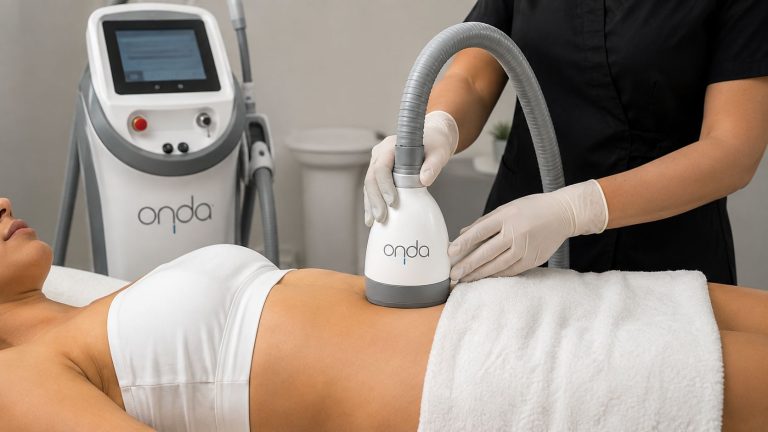
Onda is a body contouring device made by DEKA. Its CoolWaves technology uses microwave energy at 2.45 GHz. Zen House offers Onda CoolWaves in Tirana for concerns that may include localized fullness, the appearance of cellulite and skin firmness.
An Onda session should begin with an assessment of the area you want treated and the change you hope to see. The practitioner can then explain whether that concern is suitable for the treatment and what results may be realistic.
Onda is intended for body contouring, not general weight loss. Treating a selected area cannot replace a weight management plan or guarantee a change in clothing size. Zen House discusses this distinction further in its article on body contouring vs weight loss.
How Does Radiofrequency Body Contouring Work?
Radiofrequency, often shortened to RF, is a broad category. Devices use electrical energy to generate heat in tissue, but they do not all deliver that energy in the same way. Different devices may be designed with different treatment goals, settings and methods of applying energy.
That means “Onda vs RF” is only the beginning of a useful comparison. If someone recommends a radiofrequency treatment, ask for the device name and what it is intended to address. A general statement about RF cannot tell you exactly how a particular device works or whether its results are comparable with Onda.
It is also important to distinguish non-invasive RF body contouring from RF microneedling. RF microneedling uses needles to deliver energy into the skin and is a different procedure. Zen House offers Virtue RF microneedling, but that service should not automatically be treated as the RF body contouring alternative in an Onda comparison.
Onda vs Radiofrequency: The Key Differences
| Question | Onda CoolWaves | Radiofrequency body contouring |
|---|---|---|
| What energy does it use? | Microwave energy | Radiofrequency electrical energy |
| Is it one identifiable device? | Yes: Onda by DEKA | No: RF describes a category of devices |
| Are treatment goals identical? | Depends on the area and Onda treatment plan | Depends on the specific RF device and treatment plan |
| Can results be compared by technology name alone? | No | No |
| Is it the same as RF microneedling? | No | No; RF microneedling is a separate procedure involving needles |
The table explains the technologies. It does not establish that one produces better results or is safer for every person.
Start with the Concern You Want to Address
A person who says they want “body contouring” may mean several different things. Are you concerned about a pocket of localized fullness? The appearance of cellulite? Skin that looks less firm? More than one of these?
Describe the area and the specific change you would like to see. A practitioner can then explain which concern the proposed device is intended to address. Ask for a realistic description of the possible improvement, including what the treatment is unlikely to change.
Be careful with comparisons based only on before-and-after photographs. Images may show an individual result, but they do not predict your response. Differences in lighting, position, timing and treatment plans can also make photographs difficult to compare fairly.
Will One Treatment Give Faster Results?
There is no reliable answer for every Onda and RF device. The proposed number of sessions, treatment intervals and time at which results are assessed may vary. Your response may also differ from someone else’s, even when the same area is treated.
Before booking, ask how many sessions may be considered, when the practitioner would expect to review progress and whether further or maintenance treatments might be needed. Request the same information for any RF device you are comparing. That gives you a more useful basis for a decision than an unsupported promise of “instant results.”
Zen House’s guide to what to expect from an Onda treatment explains the consultation and session experience in more detail.
What About Comfort, Downtime and Risk?
The treatment experience depends on the device, area, settings and your individual response. Do not assume that all non-invasive procedures feel the same or require no aftercare.
Energy-based body treatments can have side effects and may not deliver the result you hoped for. Tell the practitioner about medical conditions, previous procedures and any implants or materials in or near the treatment area. Ask what you may feel during the session, how the area may look afterward and which symptoms should prompt you to contact the clinic.
If you are comparing Onda with an RF treatment elsewhere, ask the RF provider these same questions about its specific device. A meaningful safety comparison needs more detail than “microwave” or “radiofrequency.”
Questions to Ask at Your Consultation
Bring a short list of questions:
- Which of my concerns is this treatment intended to address?
- What exact device and applicator will be used?
- Why is this option suitable for the area I want treated?
- What result is realistic, and how will progress be assessed?
- How many visits might be considered?
- What side effects or reasons to avoid treatment apply to me?
- What will the full treatment plan cost?
Answers should relate to your goals and circumstances. If you are offered a comparison between Onda and another treatment, ask the practitioner to identify both devices and explain the basis for recommending one.
Choosing Body Contouring in Tirana
The central difference between Onda CoolWaves and radiofrequency body contouring is their energy source. Onda is a specific microwave-based device; radiofrequency describes a wider range of devices that use electrical energy. Neither label, on its own, tells you what result you will achieve.
At Zen House, you can learn about Onda CoolWaves treatment in Tirana and contact the team for an individual assessment. Explain the area and concern you want to address so the discussion can focus on suitability, realistic outcomes and an appropriate plan.
Frequently Asked Questions
Is Onda CoolWaves a radiofrequency treatment?
No. Onda CoolWaves uses microwave energy. Radiofrequency devices use a different form of energy.
Is Onda better than RF for cellulite?
That cannot be determined from the technology names alone. The answer depends on the particular RF device, the concern being treated and your individual assessment.
Is Virtue RF the same as RF body contouring?
No. Virtue RF is an RF microneedling treatment involving needles. It should be considered separately from non-invasive RF body contouring devices.
Can Onda help me lose weight?
Onda is a body contouring treatment for selected aesthetic concerns. It should not be viewed as a general weight loss treatment.