
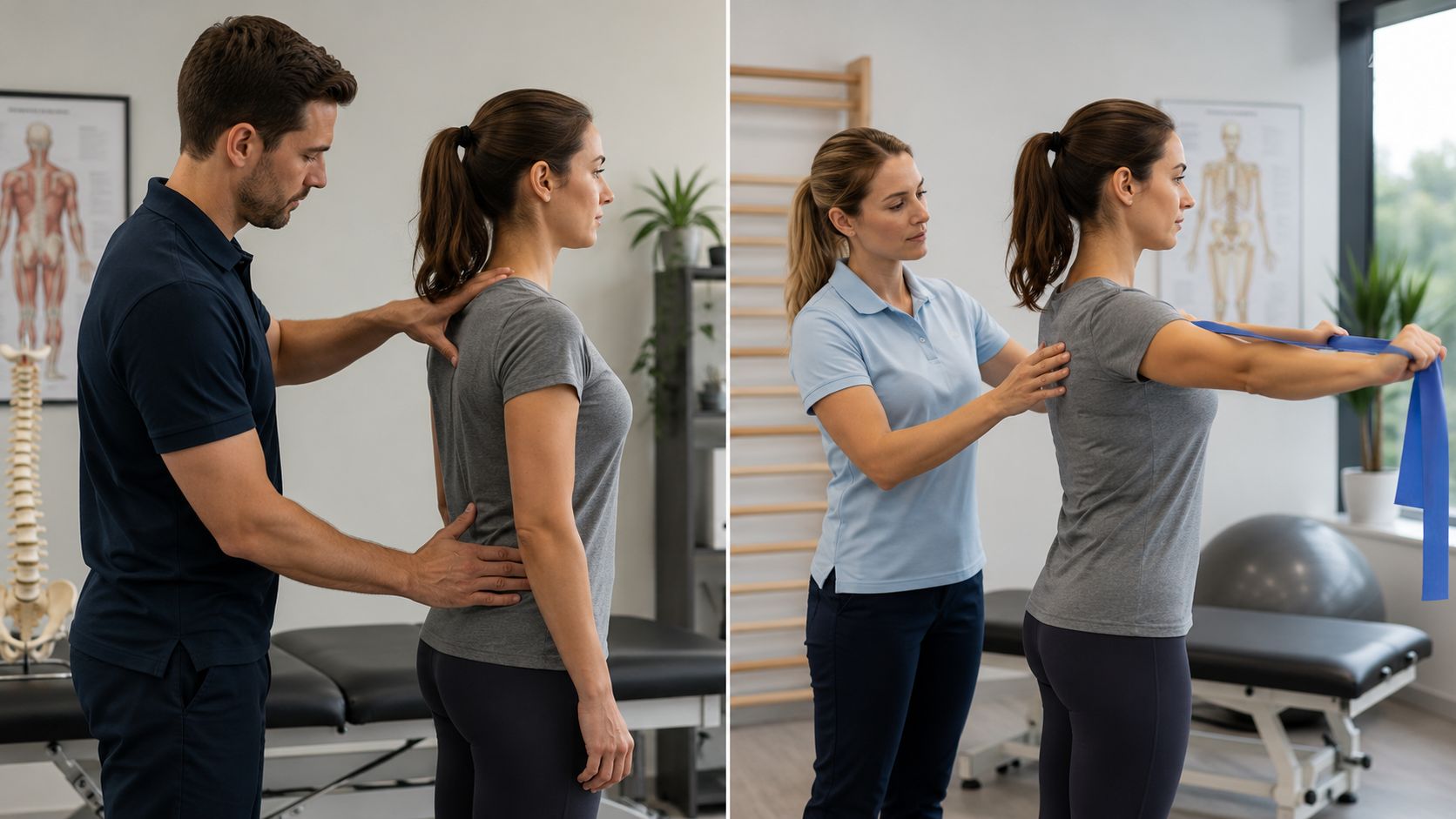
Chiropractic vs Physiotherapy: Which Treatment Is Better for Posture Correction?
Poor posture can develop for many reasons, including long hours at a desk, limited physical activity, muscle weakness, joint stiffness, previous injuries, and repetitive daily habits. Over time, these factors may contribute to neck tension, back pain, rounded shoulders, reduced mobility, and discomfort during everyday activities.
When looking for professional care, many patients ask whether they should visit a physiotherapist or a chiropractor in Albania. Both treatments can support posture improvement, but they use different methods and may be more suitable for different needs. In many cases, the most effective approach is not choosing one over the other, but combining both as part of a personalized posture correction therapy plan.
How Chiropractic Care Supports Posture Correction
Chiropractic care focuses mainly on the relationship between the spine, joints, nervous system, and overall movement. A chiropractor assesses how well different areas of the body move and whether joint restrictions may be contributing to poor posture or discomfort.
People who sit for long periods may develop stiffness in the neck, upper back, shoulders, or lower back. Restricted movement in these areas can make it difficult to maintain a comfortable upright position.
A chiropractor may use controlled manual adjustments, joint mobilization, and soft-tissue techniques to improve mobility and reduce tension. Depending on the patient’s condition, treatment may also include manual muscle work, vacuum cups, percussion therapy, or instrument-assisted techniques.
The aim is not simply to make the patient appear straighter. Chiropractic treatment seeks to restore more balanced movement so the body can adopt healthier positions with less effort.
Visiting a qualified chiropractor in Albania may be particularly helpful when poor posture is associated with spinal stiffness, restricted joint movement, recurring back or neck pain, or discomfort that worsens after sitting.
How Physiotherapy Improves Posture
Physiotherapy focuses strongly on movement rehabilitation, muscle function, strength, flexibility, balance, and physical control. While chiropractic care may improve joint mobility, physiotherapy helps train the muscles needed to maintain better posture over time.
A physiotherapist may evaluate muscle weakness, reduced flexibility, asymmetry, movement habits, and how the body responds during activities such as walking, bending, lifting, or sitting.
A personalized physiotherapy program for posture may include:
- Core-strengthening exercises
- Upper-back and shoulder-blade exercises
- Neck-control exercises
- Hip and chest stretches
- Balance and coordination training
- Mobility exercises
- Advice on sitting and working positions
- Home exercises for continued progress
Physiotherapy can be especially beneficial when poor posture is linked to weakness, injury recovery, reduced physical activity, or muscular imbalance.
What Is the Main Difference?
The main difference lies in the primary focus of each treatment.
Chiropractic care generally focuses more on joint mobility, spinal function, and manual adjustment. Physiotherapy focuses more on muscle rehabilitation, exercise, strength, and movement control.
For example, a person may have difficulty sitting upright because the upper back is stiff and the shoulders are restricted. Chiropractic treatment may help improve mobility in these areas. However, if the muscles supporting the shoulders and spine are weak, physiotherapy may be needed to help maintain the improved position.
This is why posture problems often require more than one type of treatment. Improving movement without strengthening the muscles may provide only temporary results. Similarly, exercising a body that has significant stiffness or painful restrictions may be more difficult.
Which Treatment Is Better for Office-Related Posture?
Office workers commonly experience forward-head posture, rounded shoulders, tight hips, lower-back stiffness, and tension between the shoulder blades.
A chiropractor in Albania may help reduce restricted movement caused by prolonged sitting. Chiropractic techniques can improve joint mobility and relieve tension in areas that have remained in the same position for many hours.
Physiotherapy then supports long-term improvement by strengthening the core, upper back, shoulders, and hips. It can also teach the patient how to sit, stand, lift, and move more efficiently.
For this reason, a combined posture correction therapy plan may be the best option for people whose symptoms involve both stiffness and muscle weakness.
What Happens During a Professional Assessment?
Before recommending treatment, a healthcare professional should carry out a detailed assessment. This may include reviewing your symptoms, medical history, work routine, previous injuries, physical activity, and lifestyle habits.
The specialist may examine:
- Spinal and joint mobility
- Head and shoulder position
- Muscle strength and flexibility
- Weight distribution
- Balance and coordination
- Sitting and standing posture
- Movements that cause pain
- Workplace setup and daily habits
Based on the findings, the professional can determine whether chiropractic care, physiotherapy, or a combination of both is most appropriate.
Treatment should always be personalized because posture problems are not the same for every patient.
Can Posture Be Corrected Permanently?
Posture can often be significantly improved, but permanent results depend on the patient’s daily habits. Professional treatment can reduce stiffness, improve mobility, strengthen muscles, and increase body awareness. However, returning to the same unhealthy working positions may cause symptoms to return.
Long-term improvement usually requires regular movement, corrective exercises, proper workstation setup, and attention to sitting and standing habits.
Patients should also avoid trying to hold the body in an excessively rigid position. Healthy posture is dynamic, comfortable, and adaptable. The objective is to move efficiently and reduce unnecessary stress on the body.
When Should You Seek Medical Advice?
Back or neck discomfort is not always caused by posture. Seek medical evaluation if symptoms include severe weakness, spreading numbness, fever, unexplained weight loss, loss of bladder or bowel control, or pain following a serious accident.
A responsible chiropractor or physiotherapist should recognize when treatment is not appropriate and recommend further medical investigation when necessary.
Chiropractic or Physiotherapy: The Final Choice
Neither treatment is automatically better for every patient. Chiropractic care may be more suitable when joint restriction, spinal stiffness, and reduced mobility are the main concerns. Physiotherapy may be more appropriate when muscle weakness, rehabilitation, or poor movement control are the primary problems.
For many patients, the best posture correction therapy combines both approaches. Chiropractic care can improve mobility, while physiotherapy helps build the strength and control needed to maintain better posture.
At Zen House, treatment plans can integrate chiropractic care, physiotherapy, manual therapy, soft-tissue techniques, and therapeutic exercise according to each patient’s individual needs. A professional assessment is the first step toward choosing the right approach and achieving sustainable posture improvement.