
Can Chiropractic Care Help With Joint Stiffness and Reduced Mobility?
Joint stiffness can affect much more than comfort. It can make everyday movements feel restricted, awkward or harder than they should be. Turning your head while driving, rotating your torso, reaching overhead, bending, exercising or even getting up from a chair may become more difficult when certain joints are not moving freely.
For people experiencing this type of restriction, chiropractic treatment for joint stiffness may be considered as part of a broader approach to improving movement and joint function.
At Zen House in Tirana, chiropractic care begins with an individual assessment. The goal is to understand where movement is restricted, how different joints are functioning together, and whether chiropractic treatment is appropriate for the patient’s specific condition.
Joint Stiffness Is Not Always About Pain
Many people associate chiropractic care mainly with back or neck pain. However, reduced mobility can also be an important reason to seek professional assessment.
A person may not necessarily experience severe pain but may notice that certain movements have become limited.
Common examples include:
- Difficulty turning the neck fully
- Reduced rotation through the upper body
- Stiffness in the lower back
- Restricted shoulder movement
- Difficulty bending comfortably
- A feeling that one side of the body moves more freely than the other
- Tightness after prolonged sitting
- Reduced joint movement after physical activity
These types of limitations can affect work, exercise and daily activities even when the pain level is relatively mild.
This is why joint mobility treatment should not focus only on where discomfort is felt. It should also examine how the body is moving.
What Causes Reduced Joint Mobility?
Joint stiffness can develop for many different reasons.
Some people notice restricted movement after spending long hours at a desk. Others may develop stiffness after intense physical activity, repetitive movements or periods of inactivity.
Previous injuries may also influence how certain joints move.
Over time, a person may begin compensating for restricted movement in one area by using another part of the body differently.
For example, if the upper back is particularly stiff, the neck or shoulders may need to work harder during certain movements. Similarly, reduced mobility around the hips or lower back may affect how someone bends, walks or exercises.
Because the cause can vary from person to person, the first step should be a professional evaluation rather than assuming that the same treatment will work for everyone.
How Does a Chiropractor Assess Joint Movement?
When you visit a chiropractor in Tirana for stiffness or reduced mobility, the appointment should begin with understanding your symptoms and movement limitations.
The chiropractor may ask:
- When did you first notice the stiffness?
- Which movements feel restricted?
- Is the stiffness worse in the morning or after activity?
- Have you experienced previous injuries?
- Does the restriction interfere with exercise or work?
- Is there pain associated with the movement?
- Have you already completed any medical examinations?
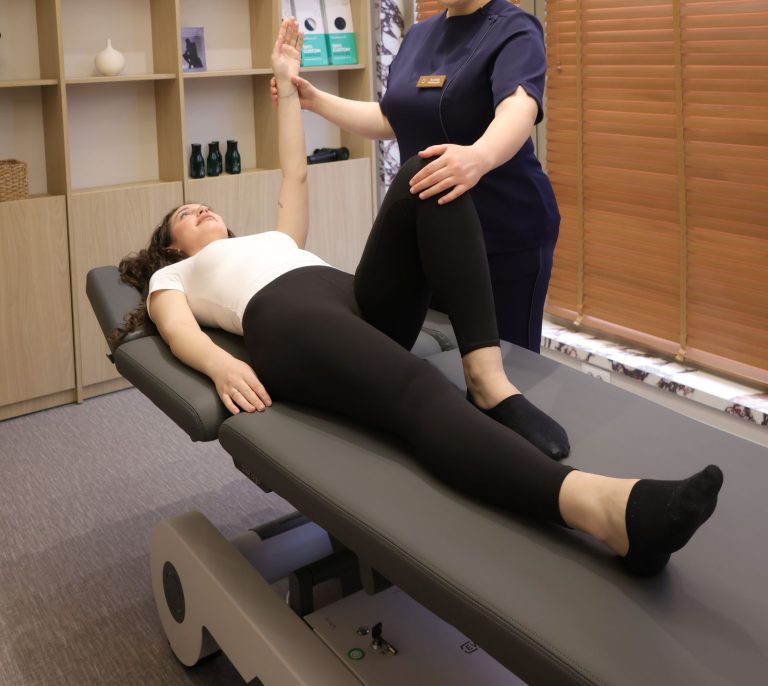
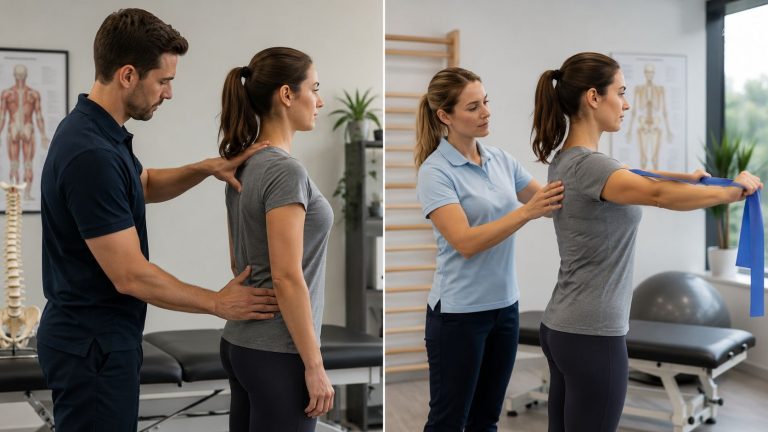
The physical assessment may then include evaluation of:
- Range of motion
- Joint mobility
- Areas of muscular tension
- Spinal movement
- Left-to-right differences
- Movements that reproduce stiffness or discomfort
This allows the chiropractor to identify which areas appear restricted before deciding whether chiropractic care may be helpful.
At Zen House, treatment is not automatically performed without assessment. The chiropractor first evaluates the individual case and decides whether chiropractic treatment is appropriate.
How Do Chiropractic Adjustments Address Restricted Movement?
For suitable musculoskeletal cases, chiropractic adjustments use controlled manual techniques with the aim of improving movement in joints that appear restricted.
These techniques are typically applied with precision to specific areas rather than using the same approach across the entire body.
The objective of chiropractic treatment for joint stiffness is not simply to create a temporary feeling of looseness. The broader goal is to support more comfortable joint movement and better overall function.
Depending on the patient’s condition, the chiropractor may work on areas such as:
- The neck
- Upper spine
- Mid-back
- Lower back
- Surrounding musculoskeletal structures
At Zen House, chiropractic adjustments may be combined with other manual techniques according to the findings of the assessment.
The exact approach varies because every patient presents with a different pattern of stiffness and movement restriction.
Chiropractic Adjustments for Neck and Torso Mobility
Two common areas where reduced mobility becomes particularly noticeable are the neck and torso.
Someone with neck stiffness may find it difficult to look over one shoulder while driving or turn the head comfortably during daily activities.
A person with restricted upper-back or torso mobility may struggle with rotational movements during exercise or sport.
In these cases, a chiropractor may evaluate not only the most restricted area but also the surrounding joints and muscles.
This is important because movement in the body is connected. Improving mobility in one region may require examining how nearby structures are functioning together.
For patients looking for chiropractic adjustments in Tirana, the assessment helps determine which areas should be addressed and which techniques may be most appropriate.
You can learn more about Zen House’s approach to chiropractic treatment in Tirana.
What If Muscular Tension Is Contributing to Stiffness?
Restricted joint movement is often accompanied by muscular tension.
When a joint is not moving comfortably, surrounding muscles may become tense or overactive as the body attempts to compensate.
At Zen House, chiropractic sessions may include different manual approaches aimed at the musculoskeletal system, depending on the patient’s condition.
This can be particularly relevant when stiffness is combined with:
- Tight muscles
- Upper-back tension
- Shoulder-blade discomfort
- Neck tension
- Lower-back tightness
- Restricted movement after exercise
However, treatment should still be based on the individual assessment rather than applying the same manual techniques to every patient.
When Physiotherapy May Also Be Recommended
Improving joint movement is sometimes only one part of the solution.
Some patients may also need to strengthen muscles, improve movement control or perform specific exercises to maintain better mobility.
In these cases, physiotherapy may be recommended alongside or after chiropractic care.
At Zen House, chiropractic treatment and physiotherapy can be combined when appropriate.
Chiropractic care may focus on joint mobility and manual treatment, while physiotherapy can include:
- Therapeutic exercises
- Strengthening
- Mobility exercises
- Rehabilitation
- Movement retraining
This combined approach can be useful when stiffness has developed gradually or when reduced mobility is associated with muscular weakness or movement habits.
Is Chiropractic Treatment Appropriate for Every Stiff Joint?
No.
Not every case of stiffness or reduced movement should automatically be treated with chiropractic adjustments.
Some symptoms may require additional medical evaluation or diagnostic imaging before treatment is considered.
The chiropractor may recommend further examination when necessary or may direct the patient toward another type of treatment.
This is why a proper chiropractic assessment is essential.
The purpose of the consultation is first to understand what is causing the limitation and then determine whether chiropractic treatment is suitable.
When Should You Consider Seeing a Chiropractor?
You may consider booking an assessment if joint stiffness is persistent and begins interfering with normal movement.
For example, you may notice that:
- Your neck no longer rotates as comfortably as before
- Your back feels consistently stiff after sitting
- Your torso rotation feels limited
- Certain exercises have become difficult because of restricted movement
- One side of your body feels noticeably less mobile
- Stiffness repeatedly returns after activity
These signs do not necessarily mean that chiropractic treatment is required, but they may indicate that a professional musculoskeletal assessment could be useful.
Looking for Joint Mobility Treatment in Tirana?
Movement is an important part of everyday function.
When joints become stiff or restricted, even simple activities can feel more difficult. Addressing reduced mobility therefore involves more than focusing only on pain—it requires understanding how the joints, muscles and surrounding structures are moving together.
If you are considering chiropractic treatment for joint stiffness, Zen House provides individualized chiropractic consultations in Tirana.
The chiropractor evaluates joint mobility, movement restrictions and muscular tension before deciding whether chiropractic care is appropriate.
Depending on your condition, the treatment plan may include chiropractic adjustments, manual techniques, physiotherapy, therapeutic exercises or further evaluation.
If you are looking for a chiropractor in Albania, a chiropractor in Tirana, or professional joint mobility treatment, the first step is an individual assessment to understand why your movement feels restricted and which approach best matches your needs.
Learn more about chiropractic treatment at Zen House in Tirana and book a consultation to have your mobility assessed.